Summary

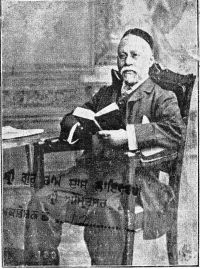
Portrait of Behramji Malabari Behramji Malabari Gujarát and the Gujarátis — The Mo'haram (1882)

Here are no external "trappings and suits of woe"—the grief is genuine, of and in the heart.
Given the time, the place, the frantic enthusiasm of the Moslem nature, and the awfulness of the tale of murder and assassination, and the veriest day-drudge will develop into a hero and a patriot, the most arrant coward will raise himself into a sympathising martyr. Wonderful is the influence of Islam on the believer's mind; and a faith that has such a hold on men's minds will endure with the sun.
Source: Wikisource

Portrait of Behramji Malabari Behramji Malabari Gujarát and the Gujarátis — The Mo'haram (1882)

The Mo'haram.
"Hai Hassan, Hai Hussein," are the wails of genuine grief that pierce the dense air of Imámbara, on Mo'haram night. "Hai Hassan, Hai Hussein," form the interlude to the touching national elegy, recited to the echo of frantic breast-beating by sturdy hard-favoured Moguls and Seedies (African Mussulmans) , who abandon themselves for the nonce to uncontrollable woe. It is the last night of the Passion week throughout Islam, when the Shehá Moslem enacts his Passion Play, and the Sooni Mahomedan keeps up his High Carnival.
Source: Wikisource

Portrait of Behramji Malabari Behramji Malabari Gujarát and the Gujarátis — The Mo'haram (1882)

On a raised seat squats the venerable Mohla, surrounded by the Hadjees and other dignitaries and eldersof the Moslem Church; and at a distancesquat vast multitudes of the faithful. To the breathless audience the voice of the Mohla is "more than the miraculous harp." In tones of intense anguish does he recite the tale of woe—how one of the heroes was poisoned by the foul assassin at Yezd, how the other was slaughtered by the dastard soldiery of Damasens, on the field of Kerbalá.
Source: Wikisource

Get perspective with Kwize: daily news enlightened by great literature