Summary

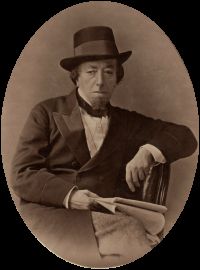
Portrait of Benjamin Disraeli Benjamin Disraeli Tancred — Chapter LVII. Message of the Pasha (1847)

Not devoid of that awe which is caused by the presence of the solemn and the beautiful, Tancred slowly traced his steps through the cavern sanctuary. No human being was visible. Upon his right was the fane to which Astarte led him on his visit of initiation. He was about to enter it, when, kneeling before the form of the Apollo of Antioch, he beheld the fair Queen of the Ansarey, motionless and speechless, her arms crossed upon her breast, and her eyes fixed upon her divinity, in a dream of ecstatic devotion.
Source: Wikisource

Portrait of Benjamin Disraeli Benjamin Disraeli Tancred — Chapter LVII. Message of the Pasha (1847)

Then turning abruptly, she looked Tancred full in the face, with a glance of almost fierce scrutiny. His clear brow and unfaltering eye, with an expression of sympathy and even kindness on his countenance, met her searching look.
'No,' she said; 'it is impossible that you can be false.'
'Why should I be false? or what is it that mixes up my name and life with these thoughts and circumstances?'
'Why should you be false? Ah! there it is,' said Astarte, in a sweet and mournful voice. 'What are any of us to you!' And she wept.
Source: Wikisource

Portrait of Benjamin Disraeli Benjamin Disraeli Tancred — Chapter LVII. Message of the Pasha (1847)

How full of adventure is life! It is monotonous only to the monotonous. There may be no longer fiery dragons, magic rings, or fairy wands, to interfere in its course and to influence our career; but the relations of men are far more complicated and numerous than of yore; and in the play of the passions, and in the devices of creative spirits, that have thus a proportionately greater sphere for their action, there are spells of social sorcery more potent than all the necromancy of Merlin or Friar Bacon.
Tancred entered the temple, the last refuge of the Olympian mind.
Source: Wikisource

Get perspective with Kwize: daily news enlightened by great literature