Summary

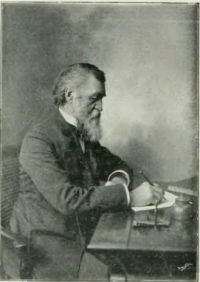
Portrait of Benjamin F. Gue Benjamin F. Gue History of Iowa From the Earliest Times to the Beginning of the Twentieth Century… (1903)

Here again did Williamson’s Iowa Brigade make a bold charge under the eye of General Sherman himself, restored the line of the Fifteenth Corps which had been broken, drove the enemy from our works and recaptured the guns which had been taken from us. Again at the Battle of Ezra Church it fought finely and suffered heavily. So also at Jonesboro and Lovejoy. Everywhere and at all times, on the march by day or by night, in the trenches of a besieged army, or in battle, it faithfully, bravely, nobly did its part in that remarkable campaign.
Source: Wikisource

Portrait of Benjamin F. Gue Benjamin F. Gue History of Iowa From the Earliest Times to the Beginning of the Twentieth Century… (1903)

Soon after the capture of Columbia the army continued its march northward meeting the enemy at Cox Bridge on the 20th of March, where the Twenty-fifth Iowa was in the thickest of the fight. It had about thirty men killed and wounded, among the latter Captain William G. Allen,
COLONEL MILO SMITH
acting major, who lost his right leg. The next day at Bentonsville the entire brigade fought bravely and received the commendation of superior officers. This was the regiment’s last battle. The losses during the campaign were seven killed, sixty-four wounded and twelve missing.
Source: Wikisource

Portrait of Benjamin F. Gue Benjamin F. Gue History of Iowa From the Earliest Times to the Beginning of the Twentieth Century… (1903)

Early in May the Twenty-sixth joined General Sherman’s army at Chattanooga and for the next four months participated in the marches, skirmishes, sieges, battles and exhausting labors of that famous campaign. The regiment lost eighty men in the various battles at Resaca, Dallas, Kenesaw and Atlanta.
Source: Wikisource

Get perspective with Kwize: daily news enlightened by great literature