Summary

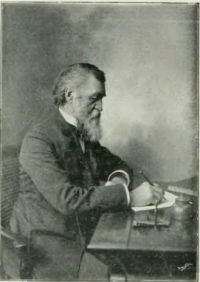
Portrait of Benjamin F. Gue Benjamin F. Gue History of Iowa From the Earliest Times to the Beginning of the Twentieth Century… (1903)

BATTLE OF TERRE NOIR
Here was the long-looked-for opportunity to attack the line of wagons. About eleven o’clock Shelby’s Brigade of cavalry suddenly fell upon the train in a wild rush with loud shouts, pouring in a volley from their carbines and charging with drawn sabers. The Twenty-ninth Iowa with a section of artillery made up the rear guard and met the charge with a well directed fire, which emptied many saddles. Three times the Confederate brigade charged upon the single regiment before the line was broken. The odds were, however, too great to be longer successfully resisted.
Source: Wikisource

Portrait of Benjamin F. Gue Benjamin F. Gue History of Iowa From the Earliest Times to the Beginning of the Twentieth Century… (1903)

Before midnight our army had been successful at all points. The great battle was won and the Confederate army was in full retreat. In many respects this was the most remarkable victory of the war and one of the most brilliant in history. The Confederate army held a much stronger position than General Meade with the Union army occupied at Gettysburg. The ground over which Hooker, Thomas and Sherman made their assaults was infinitely more difficult to approach than that at Gettysburg, where the veterans of Longstreet and Pickett made their famous charge.
Source: Wikisource

Portrait of Benjamin F. Gue Benjamin F. Gue History of Iowa From the Earliest Times to the Beginning of the Twentieth Century… (1903)

Nothing could move the gallant command of General Rice from its position, and about noon the enemy withdrew defeated. At two o’clock the last regiment had crossed and the bridge been destroyed, while the army resumed its march toward Little Rock. The army was saved by a fearful sacrifice of noble men; eight hundred had fallen in the battle including the gallant General Rice, who was mortally wounded. Captain George S. Bacon of Company C and fifty-nine men of the Twenty-ninth Iowa were left wounded on the field and fell into the hands of the enemy.
Source: Wikisource

Get perspective with Kwize: daily news enlightened by great literature