Summary

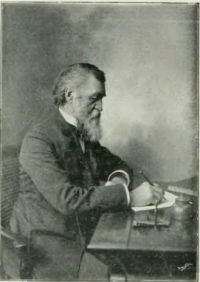
Portrait of Benjamin F. Gue Benjamin F. Gue History of Iowa From the Earliest Times to the Beginning of the Twentieth Century… (1903)

His command consisted of about 4,500 men and among them was the Eleventh Iowa, then under Major Charles Foster. The troops were transported by steamer to Goodrich’s Landing, and about the middle of August marched into the interior, subsisting on the products of the country through which they passed. Their route was nearly due west through a region low and marshy, covered with a dense growth of timber, almost impenetrable underbrush and rank tangle of vegetation which excluded the breeze. The August sun beat down so fiercely that men dropped by scores and hundreds along the line of march.
Source: Wikisource

Portrait of Benjamin F. Gue Benjamin F. Gue History of Iowa From the Earliest Times to the Beginning of the Twentieth Century… (1903)

A few days later the Confederate army was encountered, strongly posted on the ridges of Kenesaw Mountain. For nearly a month Sherman’s progress was here blocked and the time was occupied in skirmishes with the enemy. Our army was posted within range of Confederate sharpshooters and many fell victims to their deadly aim. [1] The Eleventh was not in the assault of the 27th, but lost several men killed and wounded in front of Kenesaw. As Johnston retreated, Sherman’s army followed toward the Chattahoochee River, where the Confederate army was found again strongly posted.
Source: Wikisource

Portrait of Benjamin F. Gue Benjamin F. Gue History of Iowa From the Earliest Times to the Beginning of the Twentieth Century… (1903)

The enemy had, however, so closely surrounded us that their balls which missed our men took effect in their ranks beyond us. To have held out longer would have been to suffer annihilation. The regiment was therefore compelled to surrender. The officers and men stood bravely up to their work, and never did men behave better.
Source: Wikisource

Get perspective with Kwize: daily news enlightened by great literature