Summary

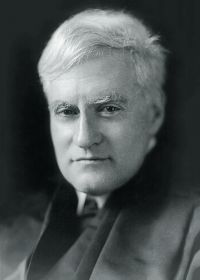
Portrait of Benjamin N. Cardozo Benjamin N. Cardozo Ohio Bell Telephone Company v. Public Utilities Commission of Ohio…

From the standpoint of due process-the protection of the individual against arbitrary action-a deeper vice is this, that even now we do not know the particular or evidential facts of which the Commission took judicial notice and on which it rested its conclusion. Not only are the facts unknown; there is no way to find them out. When price lists or trade journals or even government reports are put in evidence upon a trial, the party against whom they are offered may see the evidence or hear it and parry its effect.
Source: Wikisource

Portrait of Benjamin N. Cardozo Benjamin N. Cardozo Ohio Bell Telephone Company v. Public Utilities Commission of Ohio…

A court is not required to define the proper method of allocation until there has been a proper ascertainment of the thing to be allocated. When that has been done, there may be agreement or acquiescence in respect of the manner of division. Moreover, upon another hearing the problem may be eliminated if value, revenues and expenses are proved for each exchange.
Source: Wikisource

Portrait of Benjamin N. Cardozo Benjamin N. Cardozo Ohio Bell Telephone Company v. Public Utilities Commission of Ohio…

There being no excess revenue for the year 1933, the last year covered by the report, the Commission did not fix any percentage of reduction for the rates in future years. It did, however, prescribe a refund of the full amount of the excess for the years in which excess earnings were found to have been realized. The state-wide proceeding to fix rates for the future on the basis of a date certain was thus transformed finally into a refund proceeding, similar in function to proceedings under the Pence law for the refund of charges collected under bonds.
Source: Wikisource

Get perspective with Kwize: daily news enlightened by great literature