Summary

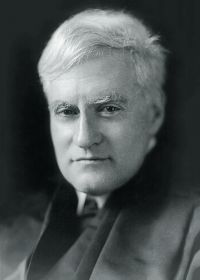
Portrait of Benjamin N. Cardozo Benjamin N. Cardozo Welch v. Helvering — Opinion of the Court

One man has a family name that is clouded by thefts committed by an ancestor. To add to this own standing he repays the stolen money, wiping off, it may be, his income for the year. The payments figure in his tax return as ordinary expenses. Another man conceives the notion that he will be able to practice his vocation with greater ease and profit if he has an opportunity to enrich his culture. Forthwith the price of his education becomes an expense of the business, reducing the income subject to taxation.
Source: Wikisource

Portrait of Benjamin N. Cardozo Benjamin N. Cardozo Welch v. Helvering — Opinion of the Court

Ordinary in this context does not mean that the payments must be habitual or normal in the sense that the same taxpayer will have to make them often. A lawsuit affecting the safety of a business may happen once in a lifetime. The counsel fees may be so heavy that repetition is unlikely. None the less, the expense is an ordinary one because we know from experience that payments for such a purpose, whether the amount is large or small, are the common and accepted means of defense against attack.
Source: Wikisource

Portrait of Benjamin N. Cardozo Benjamin N. Cardozo Welch v. Helvering — Opinion of the Court

One struggles in vain for any verbal formula that will supply a ready touchstone. The standard set up by the statute is not a rule of law; it is rather a way of life. Life in all its fullness must supply the answer to the riddle.
The Commissioner of Internal Revenue resorted to that standard in assessing the petitioner's income, and found that the payments in controversy came closer to capital outlays than to ordinary and necessary expenses in the operation of a business.
Source: Wikisource

Get perspective with Kwize: daily news enlightened by great literature