Summary

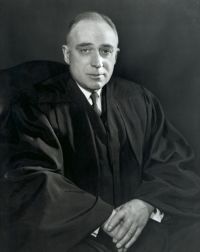
Portrait of John Marshall Harlan II John Marshall Harlan II Braunstein v. Commissioner of Internal Revenue…

As a further example, what if the individual in question is not himself engaged in any trade or business but owns stock in varying amounts in a number of corporate ventures other than the one before the court? Do we pierce each of the corporate veils, regardless of the extent and share of the individual's investment, and charge him with being in the trade or business of each such corporation?
Source: Wikisource

Portrait of John Marshall Harlan II John Marshall Harlan II Braunstein v. Commissioner of Internal Revenue…

For example, if we were to inquire whether or not the profit would have been ordinary income had an enterprise been individually owned, would we treat each taxpaying shareholder differently and look only to his trade or business or would we consider the matter in terms of the trade or business of any or at least a substantial number of the shareholders?
Source: Wikisource

Portrait of John Marshall Harlan II John Marshall Harlan II Braunstein v. Commissioner of Internal Revenue…

There is nothing in the language or structure of the section to demand or even justify reading into these provisions the additional requirement that the taxpayer must in fact have been using the corporate form as a device to convert ordinary income into capital gain. If a corporation owns but one asset, and the shareholders sell their stock at a profit resulting from an increase in the value of the asset, they have 'gain attributable to' that asset in the natural meaning of the phrase regardless of their desire, or lack of desire, to avoid the bite of federal income taxes.
Source: Wikisource

Get perspective with Kwize: daily news enlightened by great literature