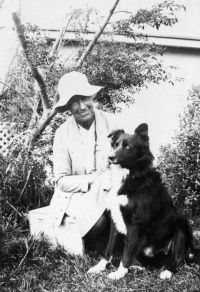
Blanche Edith Baughan

Blanche Edith Baughan

Summary

Portrait of Blanche Edith Baughan Blanche Edith Baughan Brown Bread from a Colonial Oven… (1912)

From the river, the road runs straight uphill, through a cutting between high banks of fern and gorse, with a crumbly crest of papa clay boldly yellow on the full blue sky. The road is of yellow papa also, and unmetalled, and rather heavy. Pipi grunted a good deal as she toiled up it; and about halfway up stood still to get her breath, for the pumpkin, precious as it was, lay like lead upon her frail old shoulders. Why! at the very top of the bank, glaring in the sunshine against the yellow papa, what was that?
Source: Wikisource

Portrait of Blanche Edith Baughan Blanche Edith Baughan Brown Bread from a Colonial Oven… (1912)

To those newly at liberty all the world belongs. And, like stolen waters, stolen sport is sweet. No urchin who, having safely conveyed himself away at last out of earshot of mother or teacher, bounds breathless to the beloved creek where “bullies” wait the hook, knows more of the mingled raptures of lawlessness and expectation than this old great-grandmother Pipi did, out upon the high-road, out upon the hunt!
Source: Wikisource

Portrait of Blanche Edith Baughan Blanche Edith Baughan Brown Bread from a Colonial Oven… (1912)

For Miria had gone to town, and Pipi, one whole long afternoon, was free!
She chuckled as she thought of Miria—Miria the decorous, Miria the pakeha coachman’s wife, Miria, who wore tan shoes. Miria did not like her grandmother to go roaming at her own sweet will along the roads; she did not even like her to smoke; what she did like was to have her squatted safe at the whare door, holding on to little Hana, whose kicking really began to be painful, and looking out that little Himi did not get hold of the axe and chop himself to bits.
Source: Wikisource

Get perspective with Kwize: daily news enlightened by great literature