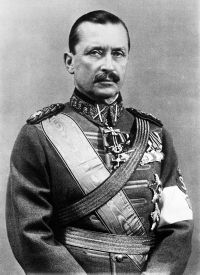
Carl Gustaf Emil Mannerheim

Carl Gustaf Emil Mannerheim

Summary

Portrait of Carl Gustaf Emil Mannerheim Carl Gustaf Emil Mannerheim A Visit to the Sarö and Shera Yögurs

I am sure any of the Yögur women would have shown more power of endurance than this young man of twenty-eight — and at the moment of parting with him, it appeared clearer than ever to me that this little, lost, Turkish tribe, living at the foot of the Nanshan mountains, with its stocking-knitting men, void of all energy and manliness, was on its way to certain annihilation.
Source: Gutenberg

Portrait of Carl Gustaf Emil Mannerheim Carl Gustaf Emil Mannerheim A Visit to the Sarö and Shera Yögurs

The men are never bald, but you often see them very grey, and judging by the women, the growth of hair is not particularly good. They have very scanty beards, and there is seldom any growth of hair on the body.
The Sarö Yögurs gave me the impression of being much sharper than the generality of Mongolians, Kalmucks and Tanguts. It is easier to make them understand you — they are livelier, imagine they understand you before you say more than a few words and interrupt you with an answer before you have explained what you want.
Source: Gutenberg

Portrait of Carl Gustaf Emil Mannerheim Carl Gustaf Emil Mannerheim A Visit to the Sarö and Shera Yögurs

The cattle are driven to the mountain slopes by the men, but all the small household duties go on unceasingly till the evening, when the sheep come home again and require attention. It is only when all the day's work is done, that dinner is first thought of. The Yögurs are quick at their work, talkative and amusing. You never hear quarrelling nor do you see dissatisfied faces. Their movements are not quick but this must be ascribed to their clumsy boots and heavy fur-coats, for you often see a man or woman running quickly and lightly down a steep mountain side.
Source: Gutenberg

Get perspective with Kwize: daily news enlightened by great literature