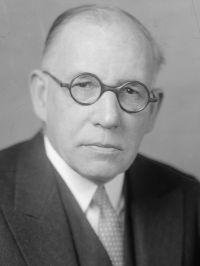
Carlton Joseph Huntley Hayes

Carlton Joseph Huntley Hayes

Summary

Portrait of Carlton Joseph Huntley Hayes Carlton Joseph Huntley Hayes 1911 Encyclopædia Britannica, Volume 19… (1911)

In March 1452 he crowned Frederick III. as emperor in St Peter’s, the last occasion of the coronation of an emperor at Rome.
Under the generous patronage of Nicholas humanism made rapid strides. He employed hundreds of copyists and scholars, giving as much as ten thousand gulden for a metrical translation of Homer, and founded a library of nine thousand volumes. Nicholas himself was a man of vast erudition, and his friend Aeneas Silvius (later Pope Pius II.) said of him that “what he does not know is outside the range of human knowledge.”
Source: Wikisource

Portrait of Carlton Joseph Huntley Hayes Carlton Joseph Huntley Hayes 1911 Encyclopædia Britannica, Volume 19… (1911)

According to the annalist Prudentius of Troyes, “he owed his election less to the choice of the clergy than to the presence and favour of the emperor Louis II. and his nobles”—who can hardly have foreseen with what ability and persist ency the rights of the Holy See as supreme arbiter of Christendom were to be asserted even against themselves by the man of their choice. Of the previous history of Nicholas nothing is recorded. His pontificate of nine years and a half was marked by at least three memorable contests which have left their mark in history.
Source: Wikisource

Portrait of Carlton Joseph Huntley Hayes Carlton Joseph Huntley Hayes 1911 Encyclopædia Britannica, Volume 19… (1911)

Nicholas II., pope from December 1058 to July 1061, was a Burgundian named Gerard, who at the time of his election was bishop of Florence. He was set up by Hildebrand, with the support of the empress-regent Agnes and of the powerful Duke Godfrey of Lorraine, against Benedict X., the nominee of the Roman nobles, and was crowned at Rome, after the expulsion of Benedict, on the 24th of January 1059; His pontificate was signalized by the continuance of the policy of ecclesiastical reform associated with the name of Hildebrand (afterwards Gregory VII.) .
Source: Wikisource

Get perspective with Kwize: daily news enlightened by great literature