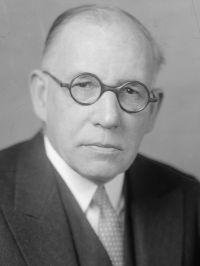
Carlton Joseph Huntley Hayes

Carlton Joseph Huntley Hayes

Summary

Portrait of Carlton Joseph Huntley Hayes Carlton Joseph Huntley Hayes 1911 Encyclopædia Britannica, Volume 26… (1911)

Sully was not popular. He was hated by most Roman Catholics because he was a Protestant, by most Protestants because he was faithful to the king, and by all because he was a favourite, and selfish, obstinate and rude. He amassed a large personal fortune, and his jealousy of all other ministers and favourites was extravagant. Nevertheless he was an excellent man of business, inexorable in punishing malversation and dishonesty on the part of others, and opposed to the ruinous court expenditure which was the bane of almost all European monarchies in his day.
Source: Wikisource

Portrait of Carlton Joseph Huntley Hayes Carlton Joseph Huntley Hayes 1911 Encyclopædia Britannica, Volume 26… (1911)

On the renewal of civil war Rosny again joined Henry of Navarre, and at the battle of Ivry (1590) was seriously wounded. He counselled Henry IV.’s conversion to Roman Catholicism, but steadfastly refused himself to become a Roman Catholic. As soon as Henry’s power was established, the faithful and trusted Rosny received his reward in the shape of numerous estates and dignities. On the death of D’O, the superintendent of finances, in 1594, the king had appointed a finance commission of nine members, to which he added Rosny in 1596.
Source: Wikisource

Portrait of Carlton Joseph Huntley Hayes Carlton Joseph Huntley Hayes 1911 Encyclopædia Britannica, Volume 26… (1911)

SULLY, MAXIMILIEN DE BÉTHUNE, Duc de (1560–1641) , French statesman, was born at the château of Rosny near Mantes, on the 13th of December 1560, of a noble family of Flemish descent. His father, François de Béthune, baron de Rosny, (1532–1575) , was the son of Jean de Béthune, to whom in 1529 his wife Anne de Melun brought as part of her dowry a seigneurie at Rosny-sur-Seine, which later (1601) was made a marquisate. Brought up in the Reformed faith, Maximilien was presented to Henry of Navarre in 1571 and was thenceforth attached to the future king of France.
Source: Wikisource

Get perspective with Kwize: daily news enlightened by great literature