Summary

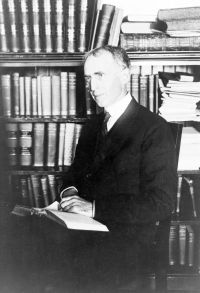
Portrait of Charles A. Beard Charles A. Beard An Economic Interpretation of the Constitution of the United States… (1913)

They knew for weeks in advance, even before the Constitution was sent to the states for ratification, what the real nature of the contest was. They resided for the most part in the towns, or the more thickly populated areas, and they could marshall their forces quickly and effectively. They had also the advantage of appealing to all discontented persons who exist in large numbers in every society and are ever anxious for betterment through some change in political machinery.
Source: Wikisource

Portrait of Charles A. Beard Charles A. Beard An Economic Interpretation of the Constitution of the United States… (1913)

Add to these the voters in Pennsylvania who opposed the ratification of the Constitution, approximately 6000, and we have 51,000 dissenting voters, against ratification. Adding the dissenters in Maryland, South Carolina, [42] and Connecticut, and taking the other states as unanimous, we may reasonably conjecture that of the estimated 160,000 who voted in the election of delegates, not more than 100,000 men favored the adoption of the Constitution at the time it was put into effect - about one in six of the adult males.
Source: Wikisource

Portrait of Charles A. Beard Charles A. Beard An Economic Interpretation of the Constitution of the United States… (1913)

When it is remembered that only about 3 per cent of the population dwelt in towns of over 8000 inhabitants in 1790, and that freeholds were widely distributed, especially in New England, it will become apparent that nothing like the same proportion was disfranchised as would be today under similar qualifications. Dr. Jameson estimates that probably one-fifth of the adult males were shut out in Massachusetts, [16] and it would probably be safe to say that nowhere were more than one-third of the adult males disfranchised by the property qualifications.
Source: Wikisource

Get perspective with Kwize: daily news enlightened by great literature