Summary

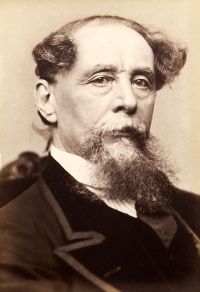
Portrait of Charles Dickens Charles Dickens A Child's History of England — Chapter 10 (1900)

The Prince encouraged the fifty sailors to row harder yet, for the honor of The White Ship.
Crash! A terrific cry broke from three hundred hearts. It was the cry the people in the distant vessels of the King heard faintly on the water. The White Ship had struck upon a rock—was filling—going down!"
Fitz-Stephen hurried the Prince into a boat, with some few Nobles. "Push off," he whispered; "and row to the land. It is not far, and the sea is smooth. The rest of us must die."
Source: Wikisource

Portrait of Charles Dickens Charles Dickens A Child's History of England — Chapter 10 (1900)

To raise her marriage-portion, he taxed the English people in a most oppressive manner; then treated them to a great procession to restore their good humor; and sent Matilda away, in fine state, with the German ambassadors, to be educated in the country of her future husband.
And now his Queen, Maud the Good, unhappily died. It was a sad thought for that gentle lady, that the only hope with which she had married a man whom she had never loved—the hope of reconciling the Norman and English races—had failed. At the very time of her death, Normandy and all France was in arms against England
Source: Wikisource

Portrait of Charles Dickens Charles Dickens A Child's History of England — Chapter 10 (1900)

The youth and innocence of the pretty little William Fitz-Robert (for that was his name) made him many friends at that time, when he became a young man, the King of France, united with the French Counts of Anjou and Flanders, supported his cause against the King of England, and took many of the King's towns and castles in Normandy. But, King Henry, artful and cunning always, bribed some of William's friends with money, some with promises, some with power.
Source: Wikisource

Get perspective with Kwize: daily news enlightened by great literature