Summary

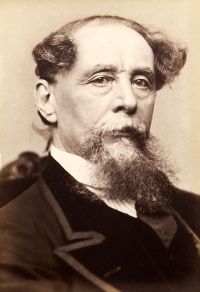
Portrait of Charles Dickens Charles Dickens A Child's History of England — Chapter 8 (1900)

But, even with his own Normans, he had a restless life. They were always hungering and thirsting for the riches of the English; and the more he gave, the more they wanted. His priests were as greedy as his soldiers. We know of only one Norman who plainly told his master, the King, that he had come with him to England to do his duty as a faithful servant, and that property taken by force from other men had no charms for him. His name was Guilbert. We should not forget his name, for it is good to remember and to honor honest men.
Source: Wikisource

Portrait of Charles Dickens Charles Dickens A Child's History of England — Chapter 8 (1900)

He then surrounded himself with Norman lords enriched by the property of English nobles; had a great survey made of all the land in England, which was entered as the property of its new owners, on a roll called Doomsday Book; obliged the people to put out their fires and candles at a certain hour every night, on the ringing of a bell which was called the Curfew; introduced the Norman dresses and manners; made the Normans masters everywhere, and the English, servants; turned out the English bishops, and put Normans in their places, and showed himself to be the Conqueror indeed.
Source: Wikisource

Portrait of Charles Dickens Charles Dickens A Child's History of England — Chapter 8 (1900)

When the morning dawned, the English, who had assembled in great strength, forced the gates, rushed into the town, and slew the Normans every one. The English afterwards besought the Danes to come and help them. The Danes came, with two hundred and forty ships. The outlawed nobles joined them; they captured York, and drove the Normans out of that city. Then, William bribed the Danes to go away; and took such vengeance on the English, that all the former fire and sword, smoke and ashes, death and ruin, were nothing compared with it.
Source: Wikisource

Get perspective with Kwize: daily news enlightened by great literature