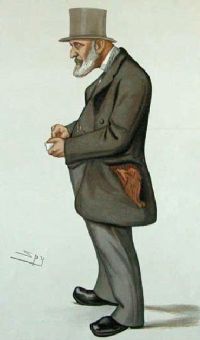
James Edwin Thorold Rogers

James Edwin Thorold Rogers

Summary

Portrait of James Edwin Thorold Rogers James Edwin Thorold Rogers The Story of Nations - Holland… (1886)

Still, as we have seen, De Witt was exceedingly complaisant to Charles before his restoration to the English throne, more so when it was finally effected, and even afterwards when Charles showed himself so captious and arrogant with the Dutch envoys. De Witt knew that Holland had now more to lose than gain by any conflict, and saw that if by any means short of a public humiliation he could keep on good terms with France and England, the losses which Holland had sustained could be easily repaired.
Source: Wikisource

Portrait of James Edwin Thorold Rogers James Edwin Thorold Rogers The Story of Nations - Holland… (1886)

That De Witt intended to give a bias to the Prince's character, which would make him prefer the interest of Holland to any other, is certain, and it is equally certain that the object was attained. No one, not even William the Silent, was more entirely devoted to his country than William III. of Holland and afterwards of England was. No man divined the dangers which threatened the Republic more clearly than William did, no one was more prompt in meeting them, and more confident, even under rebuffs, disappointments, and defeats.
Source: Wikisource

Portrait of James Edwin Thorold Rogers James Edwin Thorold Rogers The Story of Nations - Holland… (1886)

De Witt unwillingly acceded to the proposal, for he foresaw that no reliance could be placed on Charles, that he would irreconciliably offend Louis, and that if recourse was had to arms, Holland alone would have to bear the brunt of the struggle. But he gave in, and induced the deputies of the States to acquiesce in his policy. The terms of the treaty allowed Louis to keep some of his Flemish conquests, but restrained him, under the risks of war with England and the States, from making further acquisitions.
Source: Wikisource

Get perspective with Kwize: daily news enlightened by great literature