Summary

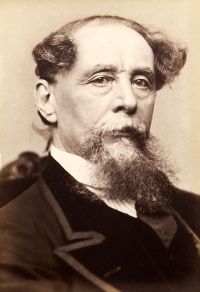
Portrait of Charles Dickens Charles Dickens A Child's History of England — Chapter 15 (1900)

When the Smith (I wish I knew his name!) was brought, all dark and swarthy with the smoke of his forge, and panting with the speed he had made; and the Black Band, falling aside to show him the Prisoner, cried with a loud uproar, "Make the fetters heavy! make them strong!" the Smith dropped upon his knee—but not to the Black Band—and said, "This is the brave Earl Hubert de Burgh, who fought at Dover Castle, and destroyed the French fleet, and has done his country much good service.
Source: Wikisource

Portrait of Charles Dickens Charles Dickens A Child's History of England — Chapter 15 (1900)

Then, the Barons began to quarrel among themselves; especially the proud Earl of Gloucester with the Earl of Leicester, who went abroad in disgust. Then, the people began to be dissatisfied with the Barons, because they did not do enough for them. The King's chances seemed so good again at length, that he took heart enough—or caught it from his brother—to tell the Committee of Government that he abolished them—as to his oath, never mind that, the Pope said!—and to seize all the money in the Mint, and to shut himself up in the Tower of London.
Source: Wikisource

Portrait of Charles Dickens Charles Dickens A Child's History of England — Chapter 15 (1900)

But ten years is a long time to hold the favor of a King. This King, too, as he grew up, showed a strong resemblance to his father, in feebleness, inconsistency, and irresolution. The best that can be said of him is that he was not cruel. De Roches coming home again, after ten years, and being a novelty, the King began to favor him and to look coldly on Hubert. Wanting money besides, and having made Hubert rich, he began to dislike Hubert.
Source: Wikisource

Get perspective with Kwize: daily news enlightened by great literature