Summary

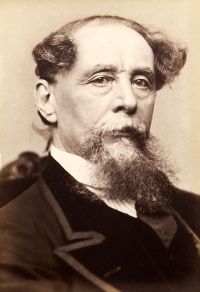
Portrait of Charles Dickens Charles Dickens A Child's History of England — Chapter 26 (1900)

If he had lived much longer he would have made many more among the people, by the grinding exaction to which he constantly exposed them, and by the tyrannical acts of his two prime favorites in all money-raising matters, Edmund Dudley and RRichard Empsom. But Death—the enemy who is not to be bought off or deceived, and on whom no money, and no treachery, has any effect—presented himself at this juncture, and ended the King's reign.
Source: Wikisource

Portrait of Charles Dickens Charles Dickens A Child's History of England — Chapter 26 (1900)

The ill-blood between France and England in this reign, arose out of the continued plotting of the Duchess of Burgundy, and disputes respecting the affairs of Brittany. The King feigned to be very patriotic, indignant, and warlike; but he always contrived so as never to make war in reality, and always to make money. His taxation of the people, on pretence of war with France, involved at one time, a very dangerous insurrection, headed by Sir John Egremont, and a common man called John à Chambre. But it was subdued by the royal forces, under the command of the Earl of Surrey.
Source: Wikisource

Portrait of Charles Dickens Charles Dickens A Child's History of England — Chapter 26 (1900)

The White Roses declared the young man to be really the Duke of York; the King declared him to be Perkin Warbeck, the son of a merchant of the city of Tournay, who had acquired his knowledge of England, its language and manners, from the English merchants who traded in Flanders; it was also stated by the Royal agents that he had been in the service of Lady Brompton, the wife of an exiled English nobleman, and that the Duchess of Burgundy had caused him to be trained and taught, expressly for this deception.
Source: Wikisource

Get perspective with Kwize: daily news enlightened by great literature