Summary

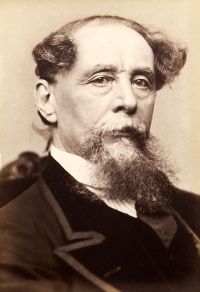
Portrait of Charles Dickens Charles Dickens Bleak House — Chapter LXIV: Esther's Narrative (1852)

Guppy looked incredulously at his friend, and at his mother, who suddenly turned very angry, and at the floor, and at the ceiling.
“Indeed?” said he. “Then, Jobling, if you was the friend you represent yourself, I should think you might hand my mother out of the gangway instead of allowing her to remain where she ain’t wanted.”
But Mrs. Guppy positively refused to come out of the gangway. She wouldn’t hear of it. “Why, get along with you,” said she to my guardian, “what do you mean? Ain’t my son good enough for you? You ought to be ashamed of yourself. Get out with you!”
Source: Wikisource

Portrait of Charles Dickens Charles Dickens Bleak House — Chapter LXIV: Esther's Narrative (1852)

In Richard, the discovery gave occasion for a burst of business and agitation that buoyed him up for a little time, but he had lost the elasticity even of hope now and seemed to me to retain only its feverish anxieties. From something my guardian said one day when we were talking about this, I understood that my marriage would not take place until after the term-time we had been told to look forward to; and I thought the more, for that, how rejoiced I should be if I could be married when Richard and Ada were a little more prosperous.
Source: Wikisource

Portrait of Charles Dickens Charles Dickens Bleak House — Chapter LXIV: Esther's Narrative (1852)

That I penetrated his secret when Dame Durden was blind to it is no wonder, for I knew the good that could never change in her better far than she did. Well! I have long been in Allan Woodcourt’s confidence, although he was not, until yesterday, a few hours before you came here, in mine. But I would not have my Esther’s bright example lost; I would not have a jot of my dear girl’s virtues unobserved and unhonoured
Source: Wikisource

Get perspective with Kwize: daily news enlightened by great literature