Summary

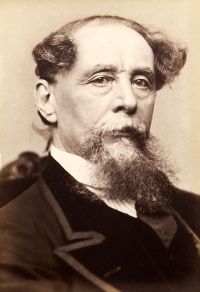
Portrait of Charles Dickens Charles Dickens Bleak House — Chapter XLII: In Mr… (1852)

At times there is a suddenness in the manner of Mademoiselle Hortense so like a bodily spring upon the subject of it that such subject involuntarily starts and fails back. It is Mr. Tulkinghorn’s case at present, though Mademoiselle Hortense, with her eyes almost shut up (but still looking out sideways) , is only smiling contemptuously and shaking her head.
“Now, mistress,” says the lawyer, tapping the key hastily upon the chimney-piece. “If you have anything to say, say it, say it.”
Source: Wikisource

Portrait of Charles Dickens Charles Dickens Bleak House — Chapter XLII: In Mr… (1852)

Like a dingy London bird among the birds at roost in these pleasant fields, where the sheep are all made into parchment, the goats into wigs, and the pasture into chaff, the lawyer, smoke-dried and faded, dwelling among mankind but not consorting with them, aged without experience of genial youth, and so long used to make his cramped nest in holes and corners of human nature that he has forgotten its broader and better range, comes sauntering home.
Source: Wikisource

Portrait of Charles Dickens Charles Dickens Bleak House — Chapter XLII: In Mr… (1852)

It is too dark to see much of the Allegory overhead there, but that importunate Roman, who is for ever toppling out of the clouds and pointing, is at his old work pretty distinctly. Not honouring him with much attention, Mr. Tulkinghorn takes a small key from his pocket, unlocks a drawer in which there is another key, which unlocks a chest in which there is another, and so comes to the cellar-key, with which he prepares to descend to the regions of old wine. He is going towards the door with a candle in his hand when a knock comes.
Source: Wikisource

Get perspective with Kwize: daily news enlightened by great literature