Summary

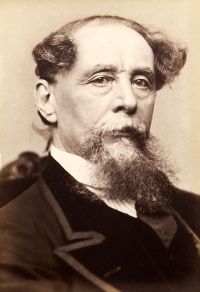
Portrait of Charles Dickens Charles Dickens Bleak House — Chapter XXX: Esther's Narrative (1852)

And then Prince took her arm in his and turned with great emotion and respect to his father, whose deportment at that moment was overwhelming.
“Thank you over and over again, father!” said Prince, kissing his hand. “I am very grateful for all your kindness and consideration regarding our marriage, and so, I can assure you, is Caddy.”
“Very,” sobbed Caddy. “Ve-ry!”
“My dear son,” said Mr. Turveydrop, “and dear daughter, I have done my duty. If the spirit of a sainted wooman hovers above us and looks down on the occasion, that, and your constant affection, will be my recompense.
Source: Wikisource

Portrait of Charles Dickens Charles Dickens Bleak House — Chapter XXX: Esther's Narrative (1852)

Woodcourt.
“If you believe you are a good prophet,” said I.
“Why, then, it is that you will marry some one very rich and very worthy, much older—five and twenty years, perhaps—than yourself. And you will be an excellent wife, and much beloved, and very happy.”
“That is a good fortune,” said I. “But why is it to be mine?”
“My dear,” she returned, “there’s suitability in it—you are so busy, and so neat, and so peculiarly situated altogether that there’s suitability in it, and it will come to pass. And nobody, my love, will congratulate you more sincerely on such a marriage than I shall.”
Source: Wikisource

Portrait of Charles Dickens Charles Dickens Bleak House — Chapter XXX: Esther's Narrative (1852)

Jellyby, being very humble and meek, had deferred to Mr. Turveydrop’s deportment so submissively that they had become excellent friends. By degrees, old Mr. Turveydrop, thus familiarized with the idea of his son’s marriage, had worked up his parental feelings to the height of contemplating that event as being near at hand and had given his gracious consent to the young couple commencing housekeeping at the academy in Newman Street when they would.
“And your papa, Caddy. What did he say?”
“Oh! Poor Pa,” said Caddy, “only cried and said he hoped we might get on better than he and Ma had got on.
Source: Wikisource

Get perspective with Kwize: daily news enlightened by great literature