Summary

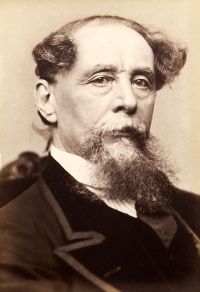
Portrait of Charles Dickens Charles Dickens,  Little Dorrit — Book 2, Chapter 26 (1857)

“ Young John turned again, and took him in at the old doorway, up the old staircase, into the old room. Arthur stretched out his hand. Young John looked at it, looked at him—sternly—swelled, choked, and said:
‘I don’t know as I can. No, I find I can’t. But I thought you’d like the room, and here it is for you.’
Surprise at this inconsistent behaviour yielded when he was gone (he went away directly) to the feelings which the empty room awakened in Clennam’s wounded breast, and to the crowding associations with the one good and gentle creature who had sanctified it.
”
Source: Wikisource

Portrait of Charles Dickens Charles Dickens,  Little Dorrit — Book 2, Chapter 26 (1857)

“ The question is simple. The question is the usual plain, straightforward, common-sense question. What can we do for ourself? What can we do for ourself?’
‘This is not the question with me, Mr Rugg,’ said Arthur. ‘You mistake it in the beginning. It is, what can I do for my partner, how can I best make reparation to him?’
‘I am afraid, sir, do you know,’ argued Mr Rugg persuasively, ‘that you are still allowing your feeling to be worked upon. I don’t like the term “reparation,” sir, except as a lever in the hands of counsel.
”
Source: Wikisource

Get perspective with Kwize: daily news enlightened by great literature