Summary

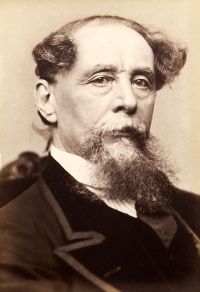
Portrait of Charles Dickens Charles Dickens Sketches by Boz — Meditations in Monmouth-Street (1836)

The inhabitants of Monmouth-street are a distinct class; a peaceable and retiring race, who immure themselves for the most part in deep cellars, or small back parlours, and who seldom come forth into the world, except in the dusk and coolness of the evening, when they may be seen seated, in chairs on the pavement, smoking their pipes, or watching the gambols of their engaging children as they revel in the gutter, a happy troop of infantine scavengers.
Source: Wikisource

Portrait of Charles Dickens Charles Dickens Sketches by Boz — Meditations in Monmouth-Street (1836)

We have always entertained a particular attachment towards Monmouth-street, as the only true and real emporium for second-hand wearing apparel. Monmouth-street is venerable from its antiquity, and respectable from its usefulness. Holywell-street we despise; the red-headed and red-whiskered Jews who forcibly haul you into their squalid houses, and thrust you into a suit of clothes, whether you will or not, we detest.
Source: Wikisource

Portrait of Charles Dickens Charles Dickens Sketches by Boz — Meditations in Monmouth-Street (1836)

Her constant anxiety for his welfare, her pride in his growth mingled sometimes with the thought, almost too acute to bear, that as he grew to be a man his old affection might cool, old kindnesses fade from his mind, and old promises be forgotten—the sharp pain that even then a careless word or a cold look would give her—all crowded on our thoughts as vividly as if the very scene were passing before us.
Source: Wikisource

Get perspective with Kwize: daily news enlightened by great literature