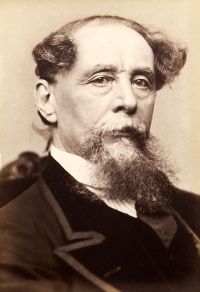
Charles Dickens

Charles Dickens

Summary

Portrait of Charles Dickens Charles Dickens To Be Read at Dusk

Mark me! by the Signor Dellombra, who had passed there in a carriage, with a frightened English lady crouching in one corner.
I never heard (said the Genoese courier, drawing a long breath) that she was ever traced beyond that spot. All I know is, that she vanished into infamous oblivion, with the dreaded face beside her that she had seen in her dream.
‘What do you call that?’ said the German courier, triumphantly. ‘Ghosts! There are no ghosts there! What do you call this, that I am going to tell you? Ghosts! There are no ghosts here!’
Source: Gutenberg

Portrait of Charles Dickens Charles Dickens To Be Read at Dusk

What I observed myself, and what la bella Carolina told me, united to explain to me that master had now set his mind on curing mistress of her fanciful terror. He was all kindness, but he was sensible and firm. He reasoned with her, that to encourage such fancies was to invite melancholy, if not madness. That it rested with herself to be herself. That if she once resisted her strange weakness, so successfully as to receive the Signor Dellombra as an English lady would receive any other guest, it was for ever conquered.
Source: Gutenberg

Portrait of Charles Dickens Charles Dickens To Be Read at Dusk

We all know what an old palace in or near Genoa is—how time and the sea air have blotted it—how the drapery painted on the outer walls has peeled off in great flakes of plaster—how the lower windows are darkened with rusty bars of iron—how the courtyard is overgrown with grass—how the outer buildings are dilapidated—how the whole pile seems devoted to ruin.
Source: Gutenberg

Get perspective with Kwize: daily news enlightened by great literature