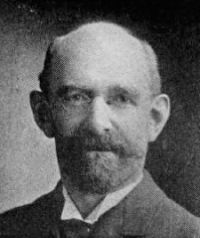
Charles Edward Nammack

Charles Edward Nammack

Summary

Portrait of Charles Edward Nammack Charles Edward Nammack Catholic Encyclopedia (1913)

A vast amount of literature has grown up around the apparently simple question of the amount of alcohol which can be oxidized or burnt up in the body and its energy made available for the needs of the system. The question as to whether alcohol is really a food has also aroused much discussion and considerable diversity of opinion. The more accurate methods of study in recent days and the careful work now being done in physiological chemistry make it certain that alcohol can be burned in the body, and that the system may derive energy therefrom, as in the oxidation of sugar or fat.
Source: Wikisource

Portrait of Charles Edward Nammack Charles Edward Nammack Catholic Encyclopedia (1913)

As a matter of fact, its disadvantages so far outweigh its useful effects, when taken as a food or beverage, that its use in this way must be emphatically condemned, while the damage that the consumption of alcohol does to man's nervous apparatus, to his intellect and will, and to his moral sense furnishes additional reason why abstinence, during health at least, should be man's rule of life.
Source: Wikisource

Portrait of Charles Edward Nammack Charles Edward Nammack Catholic Encyclopedia (1913)

There is no difference of opinion among physiologists regarding the facts of the action of alcohol in the human body. They differ strenuously regarding the conclusions to be drawn from these facts, some contending that alcohol is a "partial food when taken in moderate quantities". Modern knowledge justifies the belief that in health it is never a food in any sense, be the quantity large or small, but always a poison, biologically or physiologically speaking; in disease it is neither a food nor a poison, but may be a suitable and helpful drug.
Source: Wikisource

Get perspective with Kwize: daily news enlightened by great literature