Summary

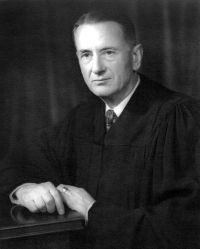
Portrait of Charles Evans Whittaker Charles Evans Whittaker Killian v. United States — Opinion of the Court

If the agents' notes of Ondrejka's oral reports of expenses were made only for the purpose of transferring the data thereon to the receipts to be signed by Ondrejka, and if, after having served that purpose, they were destroyed by the agents in good faith and in accord with their normal practice, it would be clear that their destruction did not constitute an impermissible destruction of evidence nor deprive petitioner of any right. Those are the factual representations made by the Solicitor General. Whether they are true can be determined only upon a hearing in the District Court.
Source: Wikisource

Portrait of Charles Evans Whittaker Charles Evans Whittaker Killian v. United States — Opinion of the Court

Petitioner, and the amici curiae, contend that § 5 of the Communist Control Act of 1954 (50 U.S.C. § 844, 50 U.S.C.A. § 844) is constitutionally invalid in that it violates the First Amendment of the Constitution and denies due process because it permits a jury to base its finding of membership upon statements and acts that are protected by the First Amendment. They then argue that because the challenged instruction substantially adopted 12 of the 14 criteria mentioned in that section this instruction, too, was violative of the First Amendment and denied due process.
Source: Wikisource

Portrait of Charles Evans Whittaker Charles Evans Whittaker Killian v. United States — Opinion of the Court

The most that is possible, and hence all that can be expected, is that the trial court shall give the jury a fair statement of the issues-i.e., whether petitioner was a member of or affiliated with the Communist Party on the date of his affidavit-give a reasonable definition of the terms and outline the various criteria, shown in the evidence, which the jury may consider in determining the ultimate issues.
Source: Wikisource

Get perspective with Kwize: daily news enlightened by great literature