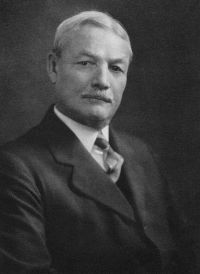
Charles McLean Andrews

Charles McLean Andrews

Summary

Portrait of Charles McLean Andrews Charles McLean Andrews British Committees, Commissions…

It was to learn all it could about boundaries, lands, mines, staple products, and manufactures; to determine whether or not nutmegs, cinnamon, cloves, pepper, and other spices would grow if planted; to inform itself regarding rivers, harbors, and fishing banks; and to estimate how many planters and parishes there were, how many whites and blacks yearly arrived, and how many people died each year. It was to learn the number of ships trading to the plantations, to discover the obstacles to trade and how they could be removed, the advantages and how they could be increased
Source: Gutenberg

Portrait of Charles McLean Andrews Charles McLean Andrews British Committees, Commissions…

Occasional committees of Parliament, the Council as a board of trade and plantations, committees of the Council, and select councils and committees do not form a very confusing body of material out of which to fashion a system of colonial control. Yet, despite this fact, the management of the colonies during the Interregnum was without unity or simplicity. Control was exercised by no single or continuous organ and according to no clearly defined or consistent plan.
Source: Gutenberg

Portrait of Charles McLean Andrews Charles McLean Andrews British Committees, Commissions…

When an important colonial difficulty had to pass from subcommittee to committee, from committee to Council, and sometimes from Council to Parliamentary committee and thence to Parliament, we can easily believe that in the excess of machinery there would be entailed a decrease of despatch and efficiency. Indeed, during the Interregnum colonial business was not well managed and there were many to whom colonial trade was of great importance, who realized this fact.
Source: Gutenberg

Get perspective with Kwize: daily news enlightened by great literature