Charles Moore Watson

Charles Moore Watson

Summary

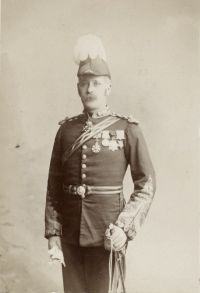
Portrait of Charles Moore Watson Charles Moore Watson 1911 Encyclopædia Britannica (1911)

About forty years after the crucifixion, the great revolt of the Jewish people against the Romans took place, and ended with the siege and capture of Jerusalem by Titus. Prior to the siege, the Christians, following the orders of their Master, had retired to the city of Pella, east of Jordan, and the date of their return to Jerusalem is uncertain. Whether any of the disciples returned after the triumph of the Romans and recognized the tomb of Christ is matter of conjecture.
Source: Wikisource

Portrait of Charles Moore Watson Charles Moore Watson 1911 Encyclopædia Britannica (1911)

The caliph Omar, who captured the city in 636, behaved with leniency to the Christians, and left them in undisputed possession of the church of the Holy Sepulchre. In 1010 the third Fatimite caliph Hakim practically destroyed it. It is remarkable that from the beginning of the 8th century, while the church of the Holy Sepulchre is always mentioned in the accounts written by visitors to Jerusalem, the church of the Cross seems to have ceased to exist, although the place where the crosses were found was shown to pilgrims, and a church was built on Mount Calvary.
Source: Wikisource

Portrait of Charles Moore Watson Charles Moore Watson 1911 Encyclopædia Britannica (1911)

Constantine the Great became emperor of Rome in A.D. 306, and was converted to Christianity six years afterwards. Embracing his new religion with enthusiasm he attributed his victories to the power of the Divine Cross, which was placed on the ensigns of the army. After the great council of the Church had been held at Nicaea in A.D. 325, the emperor decided to find the sites of the crucifixion and resurrection at Jerusalem, and to build a church at this place.
Source: Wikisource

Get perspective with Kwize: daily news enlightened by great literature