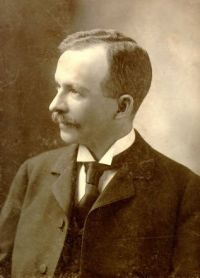
Charles W. Chesnutt

Charles W. Chesnutt

Summary

Portrait of Charles W. Chesnutt Charles W. Chesnutt The House Behind the Cedars — XI (1900)

The train had gone; there was no
telegraph to Patesville, and no letter could leave
Clarence for twenty-four hours. The best laid
schemes go wrong at times--the stanchest ships
are sometimes wrecked, or skirt the breakers
perilously. Life is a sea, full of strange currents
and uncharted reefs--whoever leaves the traveled
path must run the danger of destruction.
Source: Wikisource

Portrait of Charles W. Chesnutt Charles W. Chesnutt The House Behind the Cedars — XI (1900)

If you go to Patesville, call on my cousin, Dr.
Ed. Green, and tell him who you are. Give him
my love. I haven't seen him for twenty years.
He used to be very fond of the ladies, a very gallant
man. He can direct you to a good lawyer,
no doubt. Hoping to see you soon,
Your loving mother,
ELIZABETH TRYON.
P. S. Blanche joins me in love to you.
This affectionate and motherly letter did not
give Tryon unalloyed satisfaction. He was glad
to hear that his mother was well, but he had
hoped that Blanche Leary might have finished her
visit by this time.
Source: Wikisource

Portrait of Charles W. Chesnutt Charles W. Chesnutt The House Behind the Cedars — XI (1900)

She will spend most of her
time at mother's bedside, and he will be occupied
with his own affairs."
If Tryon should meet her--well, he was very
much in love, and he had spoken very nobly of
birth and blood. Warwick would have preferred,
nevertheless, that Tryon's theories should not be
put to this particular test. Rena's scruples had so
far been successfully combated; the question would
be opened again, and the situation unnecessarily
complicated, if Tryon should meet Rena in Patesville.
"Will he or will he not?" he asked himself.
Source: Wikisource

Get perspective with Kwize: daily news enlightened by great literature