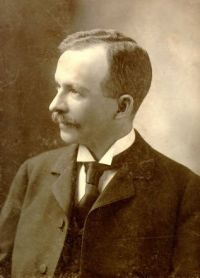
Charles W. Chesnutt

Charles W. Chesnutt

Summary

Portrait of Charles W. Chesnutt Charles W. Chesnutt The House Behind the Cedars — XXVIII (1900)

But Rena was no philosopher, either sad or
cheerful. She could not even have replied to
this argument, that races must lift themselves,
and the most that can be done by others is to
give them opportunity and fair play. Hers was
a simpler reasoning,--the logic by which the
world is kept going onward and upward when
philosophers are at odds and reformers are not
forthcoming.
Source: Wikisource

Portrait of Charles W. Chesnutt Charles W. Chesnutt The House Behind the Cedars — XXVIII (1900)

A pessimist might have
sighed sadly or smiled cynically at the notion that
a poor, weak girl, with a dangerous beauty and a
sensitive soul, and troubles enough of her own,
should hope to accomplish anything appreciable
toward lifting the black mass still floundering
in the mud where slavery had left it, and where
emancipation had found it,--the mud in which,
for aught that could be seen to the contrary, her
little feet, too, were hopelessly entangled. It might
have seemed like expecting a man to lift himself
by his boot-straps.
Source: Wikisource

Portrait of Charles W. Chesnutt Charles W. Chesnutt The House Behind the Cedars — XXVIII (1900)

Her zeal, indeed, for the time being was
like that of an early Christian, who was more
willing than not to die for his faith. Rena had
fully and firmly made up her mind to sacrifice her
life upon this altar. Her absorption in the work
had not been without its reward, for thereby she
had been able to keep at a distance the spectre of
her lost love. Her dreams she could not control,
but she banished Tryon as far as possible from her
waking thoughts.
Source: Wikisource

Get perspective with Kwize: daily news enlightened by great literature