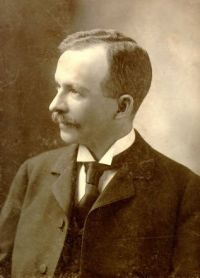
Charles W. Chesnutt

Charles W. Chesnutt

Summary

Portrait of Charles W. Chesnutt Charles W. Chesnutt The House Behind the Cedars — XXI (1900)

She had not the breadth or culture to see in all its
ramifications the great problem which still puzzles
statesmen and philosophers; but she was conscious
of the wish, and of the power, in a small way, to do
something for the advancement of those who had
just set their feet upon the ladder of progress.
This new-born desire to be of service to her
rediscovered people was not long without an
opportunity for expression.
Source: Wikisource

Portrait of Charles W. Chesnutt Charles W. Chesnutt The House Behind the Cedars — XXI (1900)

Her successive states of
consciousness were not detachable, but united to form a
single if not an entirely harmonious whole. To
her sensitive spirit to-day was born of yesterday,
to-morrow would be but the offspring of to day.
One day, along toward noon, her mother
received a visit from Mary B. Pettifoot, a second
cousin, who lived on Back Street, only a short
distance from the house behind the cedars. Rena
had gone out, so that the visitor found Mis' Molly
alone.
Source: Wikisource

Portrait of Charles W. Chesnutt Charles W. Chesnutt The House Behind the Cedars — XXI (1900)

Wain," replied Mis' Molly
complacently, "all three er my child'en wuz white, an'
one of 'em has be'n on the other side fer many
long years. Rena has be'n to school, an' has
traveled, an' has had chances--better chances than
anybody roun' here knows."
"She's jes' de lady I'm lookin' fer, ter teach ou'
school," rejoined Wain, with emphasis. "Wid
her schoolin' an' my riccommen', she kin git a fus'-
class ce'tifikit an' draw fo'ty dollars a month; an'
a lady er her color kin keep a lot er little niggers
straighter 'n a darker lady could.
Source: Wikisource

Get perspective with Kwize: daily news enlightened by great literature