Summary

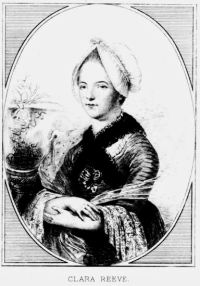
Portrait of Clara Reeve Clara Reeve,  The Old English Baron — Part II (1777)

“ He who brought light out of darkness, can bring good out of evil."
"I hope and trust so," said Edmund; "but, father, if my enemies should prevail — if my lord should believe their stories against me, and I should be put out of the house with disgrace, what will become of me? I have nothing but my character to depend upon; if I lose that, I lose every thing; and I see they seek no less than my ruin."
"Trust in my lord's honour and justice," replied Oswald; "he knows your virtue, and he is not ignorant of their ill-will towards you."
"I know my lord's justice too well to doubt it," said Edmund
”
Source: Wikisource

Portrait of Clara Reeve Clara Reeve,  The Old English Baron — Part II (1777)

“ But let what I have told you be as if you had never heard it."
"I thank you for these marks of your esteem and confidence," said Edmund; "be assured that I will not abuse them; nor do I desire to pry into secrets not proper to be revealed. I entirely approve your discretion, and acquiesce in your conclusion, that Providence will in its own time vindicate its ways to man; if it were not for that trust, my situation would be insupportable. I strive earnestly to deserve the esteem and favour of good men; I endeavour to regulate my conduct so as to avoid giving offence to any man
”
Source: Wikisource

Portrait of Clara Reeve Clara Reeve,  The Old English Baron — Part II (1777)

“ Father Oswald, who had been preceptor to the young men, had a strong affection for Edmund, from a thorough knowledge of his heart; he saw through the mean artifices that were used to undermine him in his patron's favour; he watched their machinations, and strove to frustrate their designs.
This good man used frequently to walk out with Edmund; they conversed upon various subjects; and the youth would lament to him the unhappiness of his situation, and the peculiar circumstances that attended him.
”
Source: Wikisource

Get perspective with Kwize: daily news enlightened by great literature