Summary

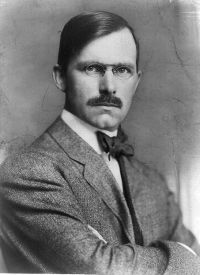
Portrait of David Grayson David Grayson Adventures in Friendship — Chapter VI: The Drunkard (1910)

He paused for a single instant and gave me a smile; then he replaced his hat as though he had far more important business to attend to, and went on up the road.
My next glimpse of him was a complete surprise to me. I saw him on the street in town. Harriet pointed him out, else I should never have recognized him: a quiet, shy, modest man, as different as one could imagine from the singer I had seen so often passing my farm. He wore neat, worn clothes; and his horse stood tied in front of the store. He had brought his honey to town to sell. He was a bee-man.
Source: Wikisource

Portrait of David Grayson David Grayson Adventures in Friendship — Chapter VI: The Drunkard (1910)

Instead of that beautiful unity of thought and action which marks the finest character, here was this poor tragedy of the divided life. When Fate would destroy a man it first separates his forces! It drives him to think one way and act another; it encourages him to seek through outward stimulation—whether drink, or riches, or fame—a deceptive and unworthy satisfaction in place of that true contentment which comes only from unity within. No man can be two men successfully.
Source: Wikisource

Portrait of David Grayson David Grayson Adventures in Friendship — Chapter VI: The Drunkard (1910)

Seeing two men struggling shall I not assist the better? Shall I let the sober one be despoiled by him who is riotous? There are realities, but there are also moralities—if we can keep them properly separated.
"Most of us," I said finally, "are in some respects drunkards. We don't give it so harsh a name, but we are just that. Drunkenness is not a mere matter of intoxicating liquors; it goes deeper—far deeper. Drunkenness is the failure of a man to control his thoughts."
The bee-man sat silent, gazing out before him.
Source: Wikisource

Get perspective with Kwize: daily news enlightened by great literature