Summary

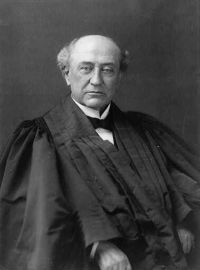
Portrait of David Josiah Brewer David Josiah Brewer Davidson Steamship Company v. United States…

In the active life and changes made by the hand of man or the action of the elements in the path of his vessel, a year's absence from the scene impairs his capacity, his skilled knowledge, very seriously in the course of a long voyage.'
It would not be strange if the jury found that a captain engaged in the navigation of the waters of Lake Superior was guilty of negligence in not keeping himself informed of changes going on from time to time in the different harbors which he was likely to be called upon to visit.
Source: Wikisource

Portrait of David Josiah Brewer David Josiah Brewer Davidson Steamship Company v. United States…

The settled rule is that where negligence is a mere question of fact, and nothing appears which is negligence per se, the determination of the question is peculiarly the province of a jury, and its conclusions will not be disturbed unless it is entirely clear that they were erroneous. Courts do not approach the question as an original one, and consider whether, in their judgment, the testimony does or does not prove negligence, but accept the determination of the jury, if there is any evidence upon which it can be rested.
Source: Wikisource

Portrait of David Josiah Brewer David Josiah Brewer Davidson Steamship Company v. United States…

In a general way, the facts are that on the night of July 24, 1901, the steamer Shenandoah, the property of the steamship company, ran into the government breakwater at Two Harbors, Minnesota. Agate bay, Lake Superior, is the harbor of the village of Two Harbors, and is an open bay, across the mouth of which there are breakwaters extending from either shore, running in an easterly and westerly direction, and leaving an open space as an entrance to the iron ore and other docks in the bay.
Source: Wikisource

Get perspective with Kwize: daily news enlightened by great literature