Summary

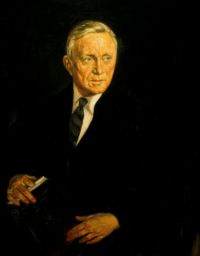
Portrait of William O. Douglas William O. Douglas Ellis v. Union Pacific Railroad Company…

Once there is a reasonable basis in the record for concluding that there was negligence which caused the injury, it is irrelevant that fair-minded men might reach a different conclusion. For then it would be an invasion of the jury's function for an appellate court to draw contrary inferences or to conclude that a different conclusion would be more reasonable.
Source: Wikisource

Portrait of William O. Douglas William O. Douglas Ellis v. Union Pacific Railroad Company…

The nearness of the track to the building created an unsafe place for work. Though the engineer was an experienced railroad worker thoroughly familiar with this particular spur, and though it was his duty to watch petitioner continuously or stop the engine, [1] he failed either to warn petitioner or to stop in time to avert the tragedy. During the operation the engineer could see the right side of petitioner and when he saw petitioner's right foot twisted on the ground, he stopped the train.
Source: Wikisource

Portrait of William O. Douglas William O. Douglas Ellis v. Union Pacific Railroad Company…

Engine foremen frequently stand to the right of the engine, on the engineer's side of the cab. A switchman was located around the curve, out of sight of the engineer, on a loading platform at which the car was to be 'spotted'. Petitioner moved between the building and the track in an attempt to be in a central position from which he could receive signals from the switchman and relay them to the engineer. As the car moved past petitioner, it caught and pinned the upper part of his body against the wall of the building, causing serious injuries.
Source: Wikisource

Get perspective with Kwize: daily news enlightened by great literature