Summary

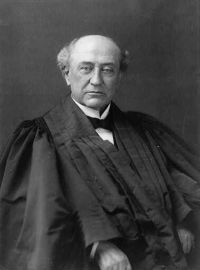
Portrait of David Josiah Brewer David Josiah Brewer Etheridge v. Sperry — Opinion of the Court

The fact that fraudulent relations are possible is hardly a sufficient reason for denouncing transactions which are not fraudulent. So, if the question were open, or a new one, unaffected by any settled law of the state, we incline to the opinion that the question is not one of law, so much as it is one of fact and good faith, and that the decision of the supreme court of Iowa rests on sound principles.
Source: Wikisource

Portrait of David Josiah Brewer David Josiah Brewer Etheridge v. Sperry — Opinion of the Court

The only parties who can claim to be injuriously affected are unsecured creditors. But they are notified by the record of the exact relations between the mortgagor and mortgagee; and surely subsequent creditors have no right to complain if they deal with the mortgagor with full knowledge of such relations. Existing creditors may of course challenge the good faith of the transaction, but, if they cannot disturb an absolute sale when made in good faith, why should they be permitted to challenge a conditional sale if made in like good faith?
Source: Wikisource

Portrait of David Josiah Brewer David Josiah Brewer Etheridge v. Sperry — Opinion of the Court

Elliott, a case coming from Indiana, the objection to the chattel mortgage appeared on the face of the instrument, in that it permitted the mortgagor not only to retain possession, but to sell and buy as theretofore, with no stipulation for the application of the surplus proceeds to the payment of the mortgage debt, the only stipulation being that the purchased goods should come within the lien of the mortgage.
Source: Wikisource

Get perspective with Kwize: daily news enlightened by great literature