Summary

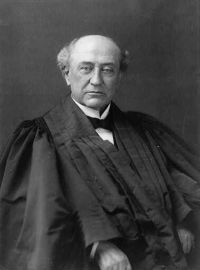
Portrait of David Josiah Brewer David Josiah Brewer Richmond Company v. Elliott — Opinion of the Court

An employe commences at the lowest grade, and, if he is competent, capable, and efficient, he is very likely to be promoted upon the happening of a vacancy above him. If one occupying a lower grade of service were injured, would he be allowed to prove, unless he had a contract to that effect, that his prospects of promotion to a higher grade and better salary were good, and would the jury be allowed to base their calculation and estimate of the damages upon a much larger salary, which he never received, but merely had a prospect of receiving?
Source: Wikisource

Portrait of David Josiah Brewer David Josiah Brewer Richmond Company v. Elliott — Opinion of the Court

Promotion was purely a matter of speculation, depending not simply upon the occurreuce of a vacancy, but upon the judgment, or even whim, of those in control. Of course, there are possibilities and probabilicies before every person, particularly a young man, and a jury, in estimating the damages sustained, will doubtless always give weight to those general probabilities, as well as to those springing from any peculiar capacities or faculties.
Source: Wikisource

Portrait of David Josiah Brewer David Josiah Brewer Richmond Company v. Elliott — Opinion of the Court

It did not appear that there was any rule on the part of the Central Company for an increase of salary after a certain length of time, or that promotion should follow whenever a vacancy occurred in a higher grade of service. The most that was claimed was that, when a vacancy took place, a subordinate who had been faithful in his employment, and had served a loug while, had a chance of receiving preferment; but that is altogether too problematical and uncertain to be presented to a jury in connection with proof of the wages paid to those in such superior employment.
Source: Wikisource

Get perspective with Kwize: daily news enlightened by great literature