Summary

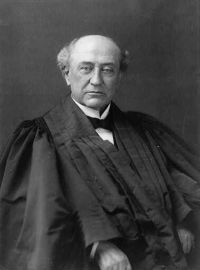
Portrait of David Josiah Brewer David Josiah Brewer Solomons v. United States — Opinion of the Court

The government has no more power to appropriate a man's property invested in a patent than it has to take his property invested in real estate; nor does the mere fact that an inventor is, at the time of his invention, in the employ of the government transfer to it any title to or interest therein. An employe, performing all the duties assigned to him in his department of service, may exercise his inventive faculties in any direction he chooses, with the assurance that whatever invention he may thus conceive and perfect is his individual property.
Source: Wikisource

Portrait of David Josiah Brewer David Josiah Brewer Solomons v. United States — Opinion of the Court

There is no difference between the government and any other employer in this respect. But this general rule is subject to these limitations: If one is employed to devise or perfect an instrument, or a means for accomplishing a prescribed result, he cannot, after successfully accomplishing the work for which he was employed, plead title thereto as against his employer. That which he has been employed and paid to accomplish becomes, when accomplished, the property of his employer.
Source: Wikisource

Portrait of David Josiah Brewer David Josiah Brewer Solomons v. United States — Opinion of the Court

He made no demand on them for any compensation for using his improvement, nor gave them any notice not to use it, till, on some misunderstanding on another subject, he gave them such notice, about the time of his leaving their foundry, and after making the agreement with the plaintiffs, who owned a foundry in Pittsburgh, for an assignment to them of his right.
Source: Wikisource

Get perspective with Kwize: daily news enlightened by great literature