Summary

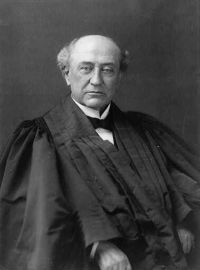
Portrait of David Josiah Brewer David Josiah Brewer Williams v. Eggleston — Opinion of the Court

But this overlooks the fact that the regulation of municipal corporations is a matter peculiarly within the domain of state control; that the state is not compelled by the federal constitution to grant to all its municipl corporations the same territorial extent, or the same duties and powers. A municipal corporation is, so far as its purely municipal relations are concerned, simply an agency of the state for conducting the affairs of government, and as such it is subject to the control of the legislature.
Source: Wikisource

Portrait of David Josiah Brewer David Josiah Brewer Williams v. Eggleston — Opinion of the Court

The parties to a contract are the ones to complain of a breach, and if they are satisfied with the disposition which has been made of it, and of all claims under it, a third party has no right to insist that it has been broken. Counsel for plaintiff in error, conceding that an entire stranger cannot take advantage of any breach, insist that the town, though not a party to the contract, had an interest in its execution
Source: Wikisource

Portrait of David Josiah Brewer David Josiah Brewer Williams v. Eggleston — Opinion of the Court

That body may place one part of the state under one municipal organization, and another part of the state under another organization of an entirely different character. These are matters of a purely local nature, in respect to which, the federal constitution does not limit the power of the state. 'Whether territory shall be governed for local purposes by a county, a city, or a township organization, is one of the most usual and ordinary subjects of state legislation.' Kelly v.
Source: Wikisource

Get perspective with Kwize: daily news enlightened by great literature