Summary

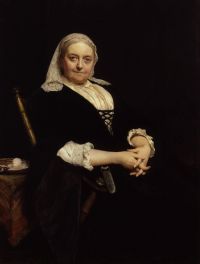
Portrait of Dinah Craik Dinah Craik John Halifax, Gentleman — Chapter XXXVIII

Or rather, as if we had settled in the certainty, which perhaps the end of our own lives alone would bring us, that he had slipped out of life altogether, and there was no such being as Guy Halifax under this pitiless sun.
The mother's heart was breaking. She made no moan, but we saw it in her face. One morning—it was the morning after John's birthday, which we had made a feint of keeping, with Grace Oldtower, the two little grandchildren, Edwin and Louise—she was absent at breakfast and dinner; she had not slept well, and was too tired to rise.
Source: Wikisource

Portrait of Dinah Craik Dinah Craik John Halifax, Gentleman — Chapter XXXVIII

Loss, affliction, death itself, are powerless in the presence of such a love as theirs.
It was already the middle of July. From January to July—six months! Our neighbours without—and there were many who felt for us—never asked now, "Is there any news of Mr. Guy?" Even pretty Grace Oldtower—pretty still, but youthful no longer—only lifted her eyes inquiringly as she crossed our doorway, and dropped them again with a hopeless sigh. She had loved us all, faithfully and well, for a great many years.
Source: Wikisource

Portrait of Dinah Craik Dinah Craik John Halifax, Gentleman — Chapter XXXVIII

They would not have denied her any happiness she wished for; still it was evidently a relief to them that she was slow in choosing it; slow in quitting their arms of love to risk a love untried. Sometimes, such is the weakness of parental humanity, I verily believe they looked forward with complacency to the possibility of her remaining always Miss Halifax. I remember one day, when Lady Oldtower was suggesting—half jest, half earnest— "better any marriage than no marriage at all;" Maud's father replied, very seriously—
"Better no marriage, than any marriage that is less than the best."
Source: Wikisource

Get perspective with Kwize: daily news enlightened by great literature