Summary

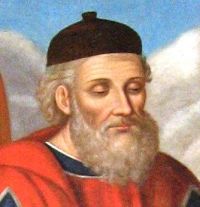
Portrait of Diodorus Siculus Diodorus Siculus The Historical Library of Diodorus the Sicilian… (1814)

Upon which, Lysander was sent thither with a few soldiers, who raised more after he came to Phocis; but not long after, Pausanias, king of Sparta, was sent to Phocis with six thousand, whereupon the Bœotians drew out their forces, and being joined by the Athenians their confederates, found Haliartus besieged by Lysander and the Phocians.
Source: Wikisource

Portrait of Diodorus Siculus Diodorus Siculus The Historical Library of Diodorus the Sicilian… (1814)

Setting sail from thence, he besieged Caunus, and Conon the Persian admiral, who then lay there with a fleet of forty sail. But Artaphernes and Pharnabazus approaching to the relief of Caunus with a great navy, Pharax raised the siege, and returned with his fleet to Rhodes.
After this, Conon got together fourscore gallies, and with these sailed over to Cherosenus. In the mean time the inhabitants of Rhodes refuse to suffer the Peloponnesian fleet to enter their harbour, revolt from the Lacedæmonians, and receive Conon with his navy into their port and city.
Source: Wikisource

Portrait of Diodorus Siculus Diodorus Siculus The Historical Library of Diodorus the Sicilian… (1814)

Tissaphernes's head cut off in a bath at Larissa. The war between the Phocians and the Bœotians. IN Greece, when the Lacedæmonians foresaw the great war they were likely to have with the Persians, they made Agesilaus, one of their two kings, their general; who, raising six thousand men, and choosing thirty of the most eminent citizens to be members of the senate, passed over out of Europe to Ephesus. There he raised four thousand more, and so marched into the field with an army of ten thousand foot, and four hundred horse.
Source: Wikisource

Get perspective with Kwize: daily news enlightened by great literature