Summary

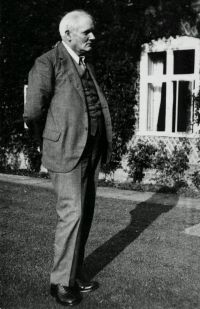
Portrait of Donald Francis Tovey Donald Francis Tovey 1911 Encyclopædia Britannica, Volume 11… (1911)

The distinction between real and tonal fugue, which is still sometimes treated as a thing of great historical and technical importance, is really a mere detail resulting from the fact that a violent oscillation between the keys of tonic and dominant is no part of the function of a fugal exposition, so that the answer is (especially in its first notes and in points that tend to shift the key) not so much a transposition of the subject to the key of the dominant as an adaptation of it from the tonic part to the dominant part of the scale, or vice versa
Source: Wikisource

Portrait of Donald Francis Tovey Donald Francis Tovey 1911 Encyclopædia Britannica, Volume 11… (1911)

The whole conception of fugue, rightly understood, is one of the most important in music, and the reasons why some contrapuntal compositions are called fugues, while others are not, are so trivial, technically as well as aesthetically, that we have preferred to treat the subject separately under the general heading of Contrapuntal Forms, reserving only technical terms for definition here.
Source: Wikisource

Portrait of Donald Francis Tovey Donald Francis Tovey 1911 Encyclopædia Britannica, Volume 11… (1911)

Klav. is subject, answer, answer, subject; a departure from the usual rule according to which subject and answer are strictly alternate in the exposition.
In conclusion we may remind the reader of the most accurate as well as the most vivid description ever given of the essentials of a fugue, in the famous lines in Paradise Lost, book xi.
It is hard to realize that this description of organ-music was written in no classical period of instrumental polyphony, but just half-way between the death of Frescobaldi and the birth of Bach. Every word is a definition, both retrospective and prophetic
Source: Wikisource

Get perspective with Kwize: daily news enlightened by great literature