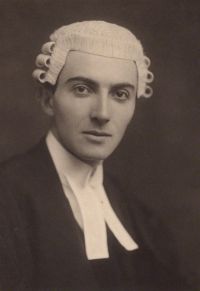
Dornford Yates

Dornford Yates

St. Jeames (1927)

Summary

Portrait of Dornford Yates Dornford Yates St. Jeames (1927)

The gates were shut, but their bars could not hide the venerable quire of elms, at the end of which Rodney could see a gable of mellow stone.
The gate-house was untenanted: one of its panes was broken and the casement had been boarded up: the gates had need of attention—urgent need: in the avenue weeds were sprouting. To go farther afield, an oak had fallen in the park; this had been struck down in leaf and still lay as it had fallen, with its broken roots in the air: and ten feet of the park's wall had bulged, and the coping had slipped.
Source: Wikisource

Portrait of Dornford Yates Dornford Yates St. Jeames (1927)

First came the man and woman whose voices Rodney had heard. They were of middle age and were laden with all manner of traps—brown-paper parcels and bundles, an umbrella and cheap leather bags. Behind, astride of an iron-grey horse, came Miss de Swete. She was hatless, but gloved, and was wearing a soft leather jumper above her breeches and boots. Her lovely dark brown hair rendered the sunshine. Her beautiful face was like a mask.
"Nigger slaves," shrilled the woman. "That's wot you want. Decen' respectable bodies is no good to you."
Source: Wikisource

Portrait of Dornford Yates Dornford Yates St. Jeames (1927)

Coldly Miss de Swete regarded him.
"You heard what they said—about the place?"
Rodney nodded.
"I don't value their opinion very much,"
"What can you do?" said Estelle.
"Most things," said Rodney boldly. "What was that man?"
"He called himself a 'working butler'."
"I can beat him at that."
"You won't stay if you can't," said Estelle. "What wages do you ask?"
Rodney hesitated. Then—
"Thirty-six pounds a year," he said.
"I'll pay you forty," said Estelle.
"Thank you," said Rodney. And then, "Shall I come at once? I mean I can send for my clothes."
Source: Wikisource

Get perspective with Kwize: daily news enlightened by great literature