Summary

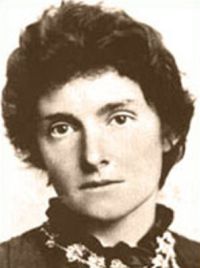
Portrait of E. Nesbit E. Nesbit Grim Tales — Uncle Abraham's Romance (1893)

To me, I being eighteen, romance was the world. My Uncle Abraham was old and lame. I followed the gaze of his faded eyes, and my own rested on a miniature that hung at his elbow-chair's right hand, a portrait of a woman, whose loveliness even the miniature-painter's art had been powerless to disguise—a woman with large lustrous eyes and perfect oval face.
I rose to look at it. I had looked at it a hundred times. Often enough in my baby days I had asked, "Who's that, uncle?" always receiving the same answer: "A lady who died long ago, my dear."
Source: Wikisource

Portrait of E. Nesbit E. Nesbit Grim Tales — Uncle Abraham's Romance (1893)

I could not tell my father why I would rather had died than go."
"What was her name, uncle?" I asked.
"She never would tell me her name, and why should she? I had names enough in my heart to call her by. Marriage? My dear, even then I knew marriage was not for me. But I met her night after night, always in our churchyard where the yew-trees were and the lichened gravestones. It was there we always met and always parted. The last time was the night before I went away. She was very sad, and dearer than life itself.
Source: Wikisource

Portrait of E. Nesbit E. Nesbit Grim Tales — Uncle Abraham's Romance (1893)

A long pause. I kept silence. "Hurry no man's cattle" is a good motto, especially with old people.
"I remember," he said in the dreamy tone always promising so well to the ear that a story delighteth—"I remember, when I was a young man, I was very lonely indeed. I never had a sweetheart. I was always lame, my dear, from quite a boy; and the girls used to laugh at me."
He sighed. Presently he went on—
"And so I got into the way of mooning off by myself in lonely places, and one of my favourite walks was up through our churchyard, which was set high on a hill in the middle of the marsh country.
Source: Wikisource

Get perspective with Kwize: daily news enlightened by great literature