Summary

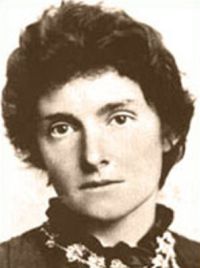
Portrait of E. Nesbit E. Nesbit Man and Maid — IX. The Old Wife (1906)

And it might have been Sylvia, the rustle of whose dress he could hear in the next room. He groaned. Then he laid his head on his arms and cried—like a child that has lost its favourite toy: for he saw, suddenly, that respect for his old wife must keep him from ever seeing Sylvia now; and life looked grey as the Thames in February twilight.
A timid hand on his shoulder startled him to the raising of his tear-stained face. The little old lady stood beside him.
“Ah, don’t!” she said softly—“don’t! Believe me, it will be all right. Your old wife won’t live more than a year—I know it.
Source: Wikisource

Portrait of E. Nesbit E. Nesbit Man and Maid — IX. The Old Wife (1906)

The thought that Sylvia should wait for a dead woman’s shoes had seemed natural; what hurt him was that she herself should see nothing unnatural in such waiting.
The silence had grown to the limit that spells discomfort; the ticking of the tall clock, the rustle of the plane tree’s leaves outside the window, the discords of Fleet Street harmonised by distance, all deepened the silence and italicised it. She spoke.
“Well?” she said.
The plane tree’s leaves murmured eloquently of the great oaks in the park. The old lady’s eyes looked at him appealingly through the pale-smoked glasses.
Source: Wikisource

Portrait of E. Nesbit E. Nesbit Man and Maid — IX. The Old Wife (1906)

Each of them was, as a wife, even as a wife in name, impossible. The task of rejection was softened to his hand by the fact that not one of them could boast the necessary hundred a year in Consols.
The interviews over, Michael, his spirit crushed by the spectacle of so many women anxious to find a refuge at an age when their children and grandchildren should, in their own homes, have been rising up to call them blessed, went to lounge a restorative hour in Sylvia’s bright little studio, and laugh with her over his dilemma.
Source: Wikisource

Get perspective with Kwize: daily news enlightened by great literature