Summary

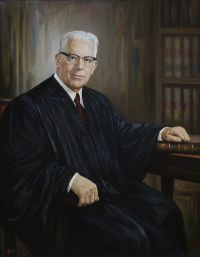
Portrait of Earl Warren Earl Warren Brotherhood Of Locomotive Engineers v…

If the District Court is free to exercise the typical powers of a court of equity, it has the power to impose conditions requiring maintenance of the status quo. Conditions of this nature traditionally may be made the price of relief when the injunctive powers of the court are invoked and the conditions are necessary to do justice between the parties. [4] 'The award of an interlocutory injunction by courts of equity has never been regarded as strictly a matter of right, even though irreparable injury may otherwise result to the plaintiff.
Source: Wikisource

Portrait of Earl Warren Earl Warren Brotherhood Of Locomotive Engineers v…

The Court of Appeals apparently concluded that a decision on the merits was inherent in the very conditioning of the injunction. It is true that a District Court must make some examination of the nature of the dispute before conditioning relief since not all disputes coming before the Adjustment Board threaten irreparable injury and justify the attachment of a condition. To fulfill its function the District Court must also consider the hardships, if any, that would arise if the employees were required to await the Board's sometimes long-delayed decisions without recourse to a strike.
Source: Wikisource

Portrait of Earl Warren Earl Warren Brotherhood Of Locomotive Engineers v…

It is true that preventing the Railroad from instituting the change imposed upon it the burden of maintaining what may be a less efficient and more costly operation. The balancing of these competing claims of irreparable hardship is, however, the traditional function of the equity court, the exercise of which is reviewable only for abuse of discretion.
Source: Wikisource

Get perspective with Kwize: daily news enlightened by great literature