Summary

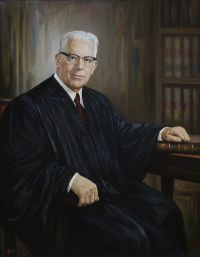
Portrait of Earl Warren Earl Warren Lombard v. Louisiana — Opinion of the Court

City of Greenville, 373 U.S. 244, 83 S.Ct. 1119, that where an ordinance makes it unlawful for owners or managers of restaurants to seat whites and Negroes together, a conviction under the State's criminal processes employed in a way which enforces the discrimination mandated by that ordinance cannot stand. Equally the State cannot achieve the same result by an official command which has at least as much coercive effect as an ordinance.
Source: Wikisource

Portrait of Earl Warren Earl Warren Lombard v. Louisiana — Opinion of the Court

But the evidence of coercion was not fully developed because the trial judge forbade petitioners to ask questions directed to that very issue.
But we need not pursue this inquiry further. A State, or a city, may act as authoritatively through its executive as through its legislative body. See Ex parte Virginia, 100 U.S. 339, 347, 25 L.Ed. 676. As we interpret the New Orleans city officials' statements, they here determined that the city would not permit Negroes to seek desegregated service in restaurants.
Source: Wikisource

Portrait of Earl Warren Earl Warren Lombard v. Louisiana — Opinion of the Court

However, unlike a number of the cases this day decided, no state statute or city ordinance here forbids desegregation of the races in all restaurant facilities. Nevertheless, we conclude that this case is governed by the principles announced in Peterson v. City of Greenville, 373 U.S. 244, 83 S.Ct. 1119, and that the convictions for this reason must be reversed.
Petitioners are three Negro and one white college students. On September 17, 1960, at about 10:30 in the morning they entered the McCrory Five and Ten Cent Store in New Orleans, Louisiana.
Source: Wikisource

Get perspective with Kwize: daily news enlightened by great literature