Summary

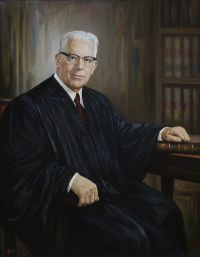
Portrait of Earl Warren Earl Warren National Labor Relations Board v…

The restriction on employees' concerted activities which would result from the construction placed upon § 8 (d) (4) by the Court of Appeals is obvious. [7] Too, we think it would discourage the development of long-term bargaining relationships. Unions would be wary of entering into long-term contracts with machinery for reopening them for modification from time to time, if they thought the right to strike would be denied them for the entire term of such a contract, though they imposed no such limitations on themselves.
Source: Wikisource

Portrait of Earl Warren Earl Warren National Labor Relations Board v…

Here the strike occurred at a time when the parties were bargaining over modifications after notice and in accordance with the terms of the contract. Where there has been no express waiver of the right to strike, [14] a waiver of the right during such a period is not to be inferred. We do not believe that the two-phase provision for terminating this contract means that it was not within the contemplation of the parties that economic weapons might be used to support demands for modification before the notice to terminate was given.
Source: Wikisource

Portrait of Earl Warren Earl Warren National Labor Relations Board v…

The court held that the 'expiration date' of the contract was the date on which all rights and obligations under it would cease; that the second notice required to bring about this termination not having been given, the strike violated § 8 (d) (4) and the strikers therefore lost their status as employees entitled to the protection of the Act. [4]
In Mastro Plastics Corp. v. National Labor Relations Board, supra, we had before us another provision of § 8 (d) . What we said there in ruling out a narrowly literal construction of the words of the statute is equally apropos here.
Source: Wikisource

Get perspective with Kwize: daily news enlightened by great literature