Summary

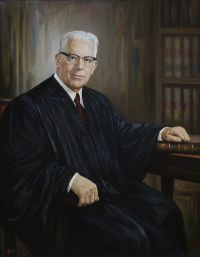
Portrait of Earl Warren Earl Warren Nelson v. City of New York — Opinion of the Court

There is no claim that the bills for the water charges were not mailed to the estate. They assert that it was not until November 1952, when the judgments of foreclosure had long since become final, that they discovered the bookkeeper's derelictions, and thus were made aware of their loss. However, as we have said, it is not disputed that the notices were mailed to the proper address. Nor is this all. Appellants themselves placed in evidence as exhibits 1950-1951 and 1951-1952 real estate tax bills for the 45th Avenue property.
Source: Wikisource

Portrait of Earl Warren Earl Warren Nelson v. City of New York — Opinion of the Court

We find the contention without merit. The statute is explicit that when the strict foreclosure provisions of Title D, Chapter 17, are invoked, they must be used against all parcels in a section of the City on which charges have been outstanding for four years. [8] It is clear that the aim is to prevent precisely the kind of discrimination of which appellants complain. Appellants do not assert that the statute was not complied with in this regard.
Source: Wikisource

Portrait of Earl Warren Earl Warren Nelson v. City of New York — Opinion of the Court

In November 1952, the appellants offered to pay with interest and penalties all amounts owing to the City on the two parcels. The offer was refused, and the appellants instituted a plenary action to set aside the City's deed to the Powell Street property and to recover the surplus proceeds from the sale of the 45th Avenue property. The Appellate Division of the New York Supreme Court affirmed the denial of the requested relief without prejudice to appellants' seeking to open their default by motions in the foreclosure proceedings.
Source: Wikisource

Get perspective with Kwize: daily news enlightened by great literature