Summary

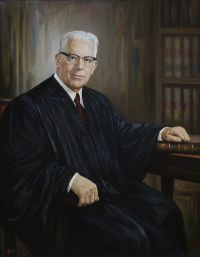
Portrait of Earl Warren Earl Warren Prince v. United States — Opinion of the Court

See note 1, supra.↑ The Bank Robbery Act has, since it was passed in 1934, contained a special provision for increased punishment for aggravated offenses. One who, in committing robbery, assaults and person or puts the life of any person in jeopardy by the use of a dangerous weapon can be sentenced to 25 years in jail or fined $10,000 or both. When the Act was amended in 1937 to add larceny and unlawful entry, these were incorporated in the same paragraph with robbery and thus made subject to the increased penalty under aggravating circumstances.
Source: Wikisource

Portrait of Earl Warren Earl Warren Prince v. United States — Opinion of the Court

United States
Argued: Dec. 11, 1956. --- Decided: Feb 25, 1957
The question presented by this case calls for interpretation of the Federal Bank Robbery Act. 18 U.S.C. § 2113, 18 U.S.C.A. § 2113. [1] That statute creates and defines several crimes incidental to and related to thefts from banks organized or insured under federal laws. Included are bank robbery and entering a bank with intent to commit a robbery. [2] We must decide here whether unlawful entry and robbery are two offenses consecutively punishable in a typical bank robbery situation.
Source: Wikisource

Portrait of Earl Warren Earl Warren Prince v. United States — Opinion of the Court

The gravamen of the offense is not in the act of entering, which satisfies the terms of the statute even if it is simply walking through an open, public door during normal business hours. [9] Rather the heart of the crime is the intent to steal. This mental element merges into the completed crime if the robbery is consummated. To go beyond this reasoning would compel us to find that Congress intended, by the 1937 amendment, to make drastic changes in authorized punishments.
Source: Wikisource

Get perspective with Kwize: daily news enlightened by great literature